









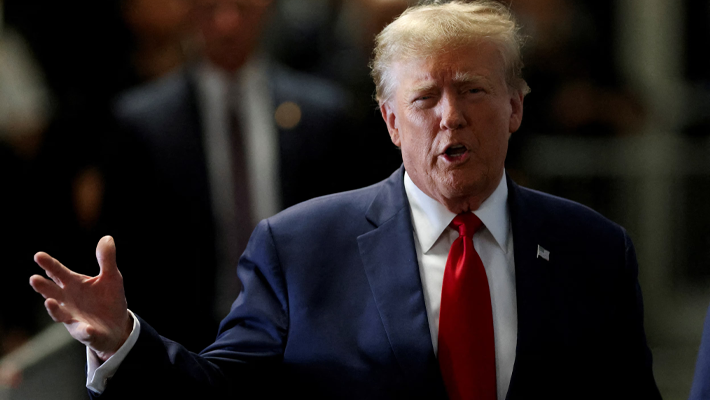
President Donald Trump on Tuesday announced a new round of travel restrictions affecting Nigeria and several other countries, citing concerns over U.S. national security.
In a statement released by the White House, the president said he had signed a proclamation aimed at tightening and expanding entry limits on nationals from countries with what it described as long-standing and serious weaknesses in screening, vetting, and information-sharing processes. The move, the statement noted, is intended to safeguard the United States from potential national security and public safety risks.
Nigeria was singled out in the proclamation, with the Trump administration pointing to security challenges in parts of the country. The White House said extremist groups such as Boko Haram and the Islamic State operate in certain regions, creating what it called significant difficulties in effective screening and vetting of travelers.
The statement also referenced visa compliance issues, noting that Nigeria recorded a B-1/B-2 visa overstay rate of 5.56 percent, while overstay rates for F, M, and J visas stood at 11.90 percent, according to the U.S. Overstay Report.
In addition to Nigeria, the travel restrictions extend to Angola, Antigua and Barbuda, Benin, Côte d’Ivoire, Dominica, Gabon, The Gambia, Malawi, Mauritania, Senegal, Tanzania, Tonga, Zambia, and Zimbabwe.